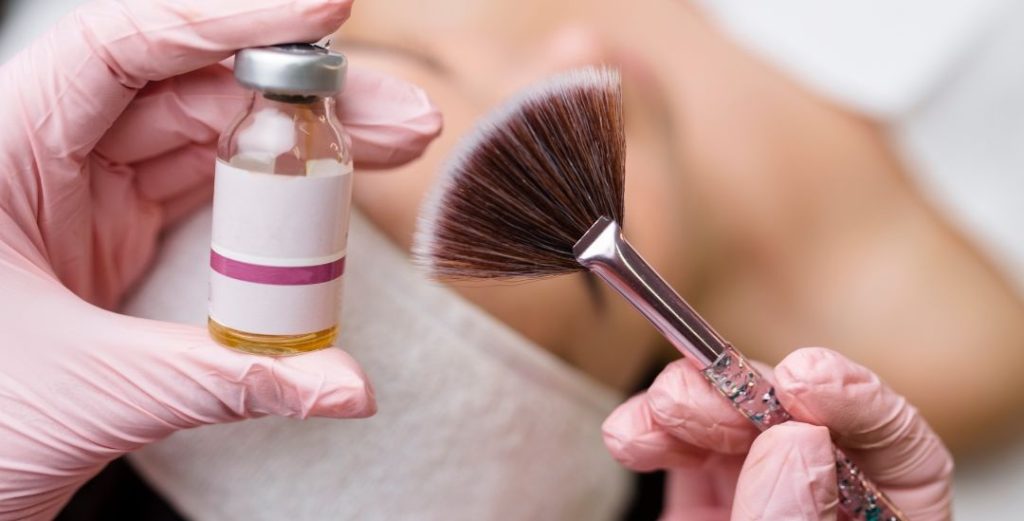

Good faith exam for chemical peel compliance often breaks down in clinics that are otherwise disciplined about injectables and lasers. Peels are treated as lower-risk, so an aesthetician runs the consultation, intake is mistaken for clinical clearance, and a provider signs the chart without conducting an independent review.
The real question is not whether the clinic collected forms. It is whether the planned peel was classified correctly and an authorized provider made a documented, patient-specific decision before treatment when the law required one.
What Is a Good Faith Exam for Chemical Peels?
A Good Faith Exam is a patient-specific medical evaluation performed by a professional who is authorized to assess the patient and make the relevant treatment decision. It is different from an aesthetic consultation, consent form, or intake questionnaire because it requires independent clinical judgment.
For a chemical peel, that judgment may account for the planned agent and depth, current medications, prior procedures or reactions, active skin conditions, healing history, treatment goals, and other patient-specific risks. The AAD chemical peel guidance provides useful clinical context on peel types and uses. Clinics needing a broader definition can review what a Good Faith Exam includes.
Is a Good Faith Exam Required for Chemical Peels?
The question “is a good faith exam required for chemical peels” has no single nationwide answer. Requirements depend on how the state classifies the procedure, the depth and agent involved, who performs the peel, and the rules governing the clinic.
States often distinguish superficial exfoliation from peels that affect living tissue. Texas medical-spa guidance treats medium and deep peels that penetrate the dermis as medical procedures, while California chemical-exfoliation guidance limits estheticians to light or superficial exfoliation. Other jurisdictions may also consider concentration, pH, intended effect, professional scope, or delegation. Chemical peel good faith exam requirements must therefore follow the actual service and jurisdiction, not its menu label.
- Superficial peels: May remain within esthetic scope in some states, but “superficial” is not a universal exemption from evaluation or oversight requirements.
- Medium peels: Reach beyond the epidermis and are more likely to be regulated as medical procedures requiring authorized clinical decision-making.
- Deep peels: Carry the clearest medical-procedure implications and may trigger additional provider, facility, monitoring, or delegation requirements.
When a peel is treated as a medical procedure, a good faith exam before chemical peel treatment may be necessary to establish the patient-specific plan before care begins. The legal requirements overview explains the wider compliance framework, while each clinic must still confirm the controlling state rules. See also when med spas may need Good Faith Exams.
Good Faith Exam for Chemical Peel Compliance: The Mistakes That Expose the Gap
Good faith exam for chemical peel compliance is fundamentally about broken decision points. The following mistakes can make a workflow look complete even when the required provider review is missing, late, or too vague to support the treatment delivered.
Mistake 1: Assuming Every “Light” Peel Is Automatically Cosmetic
Product branding does not control legal classification. Before deciding that a peel remains within cosmetic scope, document its agent, concentration, pH, intended depth, manufacturer directions, treatment area, and performer. Labels such as “light” or “lunchtime” do not resolve the state scope analysis.
Mistake 2: Letting Intake Stand in for Clinical Judgment
An intake form can collect medication, allergy, skin, and treatment history, but it cannot decide whether the planned peel is appropriate. If the chart contains patient answers without an authorized provider’s assessment and decision, the clinic has documented information collection rather than clinical clearance.
Mistake 3: Adding a Provider Signature After Treatment
A retrospective signature does not show that clinical judgment guided the treatment. A GFE before chemical peel med spa treatment should be completed early enough for the decision to affect the plan, including whether to proceed, defer, modify the peel, or request an in-person assessment.
Standing protocols and supervision agreements may define responsibilities, but they do not automatically create a patient-specific evaluation. The record should identify who reviewed the patient, what was considered, and what was decided before treatment.
Mistake 4: Treating Repeat Patients as Permanently Cleared
A previous peel does not establish indefinite suitability. Medications, pregnancy status, skin integrity, recent procedures, healing history, and the proposed agent or depth may change between visits.
That does not mean every state requires a new full GFE for every session. It means the clinic needs a written reassessment policy that follows state rules, the treatment plan, provider instructions, and material changes in the patient’s condition.
Who Can Perform a Chemical Peel Good Faith Exam?
If state law requires a medical evaluation, the professional completing it must be authorized to assess the patient and decide on treatment where the patient is located. Independent clinical authority—not time spent with the patient—is the dividing line.
| Clinic role | General position for a medical GFE |
| Physician (MD or DO) | May perform the evaluation when properly licensed and acting within applicable state and telehealth rules. |
| Nurse practitioner | May qualify where state scope, collaboration, supervision, and practice-model requirements permit. |
| Physician assistant | May qualify where state scope, delegation, and supervision requirements permit. |
| Registered nurse | May collect information and support care but generally does not independently diagnose or issue medical clearance. |
| Aesthetician or esthetician | May perform permitted cosmetic services but does not independently make a medical treatment decision. |
These distinctions do not replace state-specific analysis. Physician, NP, and PA authority still depends on licensure, scope, supervision or collaboration, and the treatment involved. The ASPS nonsurgical procedure standards provide broader context on qualified facial rejuvenation care.
Telehealth Good Faith Exam for Chemical Peels: What Must Be Checked?
A telehealth good faith exam for chemical peels may be appropriate where state law permits remote evaluation and the chosen modality allows the provider to meet the applicable standard of care. The provider must be licensed or otherwise authorized where the patient is located.
Telehealth does not remove the need for sufficient clinical information. Visual limitations, poor lighting, image quality, active skin findings, or an uncertain history may require better images, live video, additional records, or an in-person examination. Clinics should not assume that a questionnaire alone qualifies simply because it was completed through an online platform.
Chemical Peel GFE Compliance Depends on a Defensible Record
Chemical peel GFE compliance is strongest when the chart connects the assessment directly to the planned service. Documentation should identify the reviewing provider, relevant history, the peel or treatment category considered, material findings, the clinical decision, and any conditions attached to clearance.
The record should also distinguish among patient intake, informed consent, the medical evaluation, and the treatment note. These documents serve different purposes. Clinics can use this Good Faith Exam documentation guide to strengthen that separation.
Record-retention periods are state-specific and may vary by provider type, facility, patient age, and record category. Clinics should follow the longest applicable requirement rather than relying on a generalized national timeframe.
Turn Common Peel Mistakes Into a Defensible Workflow
Good faith exam for chemical peel compliance becomes easier to manage when each patient moves through the same decision sequence: classify the peel, identify the responsible provider, complete the required evaluation, document the decision, and release the patient for treatment only when the record supports it.
If any of these mistake patterns resemble your current process, review the most common Good Faith Exam mistakes across other med spa services. Clinics ready to separate intake from independent provider review can then explore Good Faith Exams for med spas as the next operational step.
Frequently Asked Questions
Do all chemical peels require a Good Faith Exam?
No universal rule applies to every peel. When asking “is a good faith exam required for chemical peels,” clinics must examine state law, peel classification, provider scope, treatment setting, and the agent and depth planned.
What are the most common GFE compliance mistakes in chemical peel clinics?
Good faith exam for chemical peel compliance most often fails through peel misclassification, intake replacing evaluation, a signature added after treatment, or indefinite reliance on an old clearance.
Who is legally qualified to perform a pre-peel Good Faith Exam?
A good faith exam before chemical peel treatment must be completed by a professional authorized to make the medical decision in the patient’s state. Authority may include physicians, NPs, or PAs, depending on local rules.
Does peel depth or strength affect Good Faith Exam requirements?
Yes. Chemical peel good faith exam requirements may change with treatment depth, agent, concentration, pH, intended effect, and whether the procedure reaches living tissue. State definitions and professional-scope rules control the final classification.
Can a chemical peel Good Faith Exam be done via telehealth?
A telehealth good faith exam for chemical peels may be permitted when the provider is properly authorized and the modality supports an adequate evaluation. State-specific telehealth and in-person examination rules still apply.
What contraindications must a provider identify before a chemical peel?
The provider should assess relevant medications, active infection or inflammation, healing and scarring history, previous reactions, recent procedures, pregnancy status when relevant, and other factors specific to the planned peel.
What documentation should a clinic retain after a chemical peel GFE?
Chemical peel GFE compliance documentation should identify the provider, relevant history, planned treatment, material findings, clinical decision, and any restrictions. Intake, consent, evaluation, and treatment records should remain clearly distinguishable.
Is a new Good Faith Exam required for each peel session?
Not necessarily. Frequency depends on state rules, provider instructions, the established treatment plan, changes in peel type or depth, and material changes in the patient’s medications, health, or skin condition.
What happens when a clinic performs a chemical peel without a GFE?
If an evaluation was legally required, proceeding without it may create scope, delegation, documentation, licensing, and liability exposure. The consequences depend on the jurisdiction, the professionals involved, and the circumstances.
How do state medical board rules affect pre-peel GFE requirements?
State rules determine whether a GFE before chemical peel med spa treatment is required, who may make the decision, and whether telehealth is acceptable. Cosmetology, nursing, pharmacy, and facility rules may also apply.
Can a licensed aesthetician perform a Good Faith Exam for chemical peels?
An aesthetician may gather history and perform permitted peel services, but generally cannot independently complete a medical evaluation or issue clearance. Exact authority depends on the state’s esthetics scope and treatment classification.
What patient history elements must a provider review before a chemical peel?
Relevant history includes medications, allergies, skin conditions, active lesions, previous peels or reactions, recent procedures, healing or scarring problems, and factors affecting recovery. The review should match the specific peel planned.